Wish Recovery’s Blog Category

Dual Diagnosis

Does UnitedHealthcare Cover Rehab and Detox? A 2026 Guide

You're holding the insurance card, running numbers before you've even said the word rehab out loud. That fear is real. It makes sense. So does the question underneath it: will United Healthcare actually pay for this? The short answer is yes. In most cases, drug and alcohol rehab and detox are covered under your health insurance plan. But how much your insurance coverage actually pays changes everything about your bill. So does your network and the conditions attached. This guide walks you through your United Healthcare coverage options, plainly, and what your plan may not cover.

Key takeaways

  • UnitedHealthcare covers medically necessary rehab and detox through Optum Behavioral Health, its behavioral health partner.
  • Coverage often stretches from detox through outpatient rehab, including PHP and IOP, once medical necessity is established.
  • With a PPO, out-of-network rehab centers are on the table, but reimbursement gets calculated differently than in-network care.
  • That's different from UnitedHealthcare's Medicare inpatient rehab benefit, which covers physical recovery, not addiction treatment.


You don't have to sort through plan language alone. Reach out to our team for a confidential conversation about what's possible for you.


Out-of-State Rehab & PPO Coverage: How It Actually Works

Somewhere between deciding you need addiction treatment and booking a flight, one question stops everything: will your insurance follow you out of state? Most PPO plans include an out-of-network benefit built for exactly this situation. When a rehab center isn't in-network, there's often a specific tool your admissions team can request on your behalf. This guide walks you through how out-of-state rehab, PPO coverage, single case agreements, and discreet travel work, so you're deciding with real information instead of guesswork.

Key takeaways

  • Many PPO plans cover addiction treatment out of state, so your options don't stop at the state line.
  • When a rehab center isn't in-network, a single case agreement can bring costs closer to in-network rates.
  • Federal parity law requires insurers to cover behavioral health care no more restrictively than physical health care.
  • Substance use treatment records carry stronger federal privacy protections than general health records, supporting discreet travel.


You don't have to have every insurance question answered before you reach out. Talk with our admissions team today, and we'll help you map out your treatment options.


How to Choose a Luxury Residential Rehab: An Honest Guide for Families

Five browser tabs open. Five infinity pools. Five "world-class" claims. At some point, luxury rehab websites start looking like the same brochure with a new logo on top.

That skeptical feeling isn't distrust. It's smart.

This guide skips the sales pitch. We'll cover what actually makes a luxury residential rehab worth choosing.

Real accreditation you can check yourself. An honest staff-to-client ratio. The red flags most families never hear about.

Key takeaways

  • Luxury amenities and real clinical quality are only weakly linked, so comfort alone shouldn't decide your choice.
  • A legitimate rehab holds a current state license plus at least one independent accreditation you can verify yourself.
  • Ask for the actual clinician-to-client ratio today, not a marketing number or a maximum capacity.
  • Patient brokering, pressure to decide fast, and guaranteed beds before insurance verification are real warning signs.

Vetting a rehab shouldn't feel like a second job. Talk with our admissions team about any question in this guide, no commitment required.


Gambling and Alcohol Addiction: Why They Go Together

Maybe it started with one drink to steady your nerves before you sat down to play. Or maybe the losses came first. Pouring a drink was the only thing that quieted the noise afterward. If gambling and alcohol addiction feel like the same problem wearing two faces, you are not imagining a pattern. You are describing a real one, and there is a reason it happens.

Key takeaways

  • Gambling addiction and alcohol addiction often develop together. They share the same reward pathway in the brain, not weak willpower.
  • Twin research shows genetic and environmental factors explain much of the overlap between gambling disorder and alcohol use disorder.
  • An addictive personality is a real, researched vulnerability. It is not an excuse you made up.
  • Treating both addictions together, instead of one at a time, tends to work better.


You do not have to sort out which addiction came first before reaching out. Talk with our team confidentially today, and let us help you make sense of it.


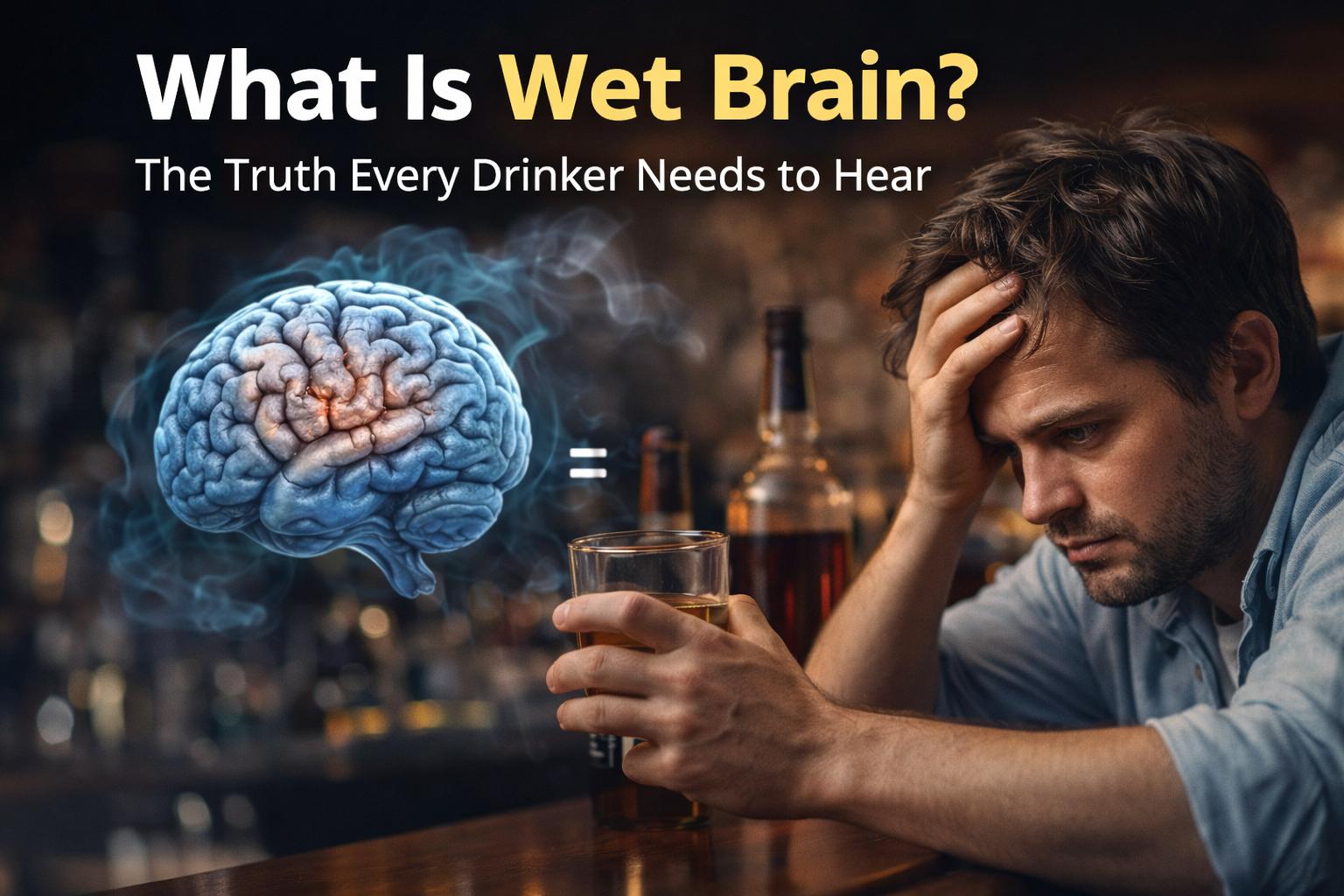
What is Wet Brain? The Risky Truth Every Drinker Needs to Hear Now

Here's something they don't mention during happy hour: hours—not months—separate reversible brain damage from a permanent condition that steals your ability to form new memories. It's called wet brain, and it happens to people who never thought they were "that kind of drinker."

You might have heard it mentioned in passing. Maybe you laughed it off as something that only happens to people on the street. But Wernicke-Korsakoff syndrome isn't picky about zip codes or tax brackets. It shows up in boardrooms and studio apartments alike, and it doesn't wait until you "hit rock bottom" to begin its work.

Dual Diagnosis Treatment in Massachusetts That Really Works

If you’re facing both mental health challenges and substance use disorders, dual diagnosis treatment massachusetts offers integrated care that addresses both conditions at once. In Massachusetts you’ll find programs combining safe medical detox, clinical residential treatment and evidence-based therapies. This coordinated approach can reduce relapse risk, stabilize co-occurring symptoms and support long-term recovery.

Finding Effective Dual Diagnosis Treatment in New York

When you’re facing both a mental health disorder and a substance use disorder, finding effective dual diagnosis treatment new york can make all the difference in your recovery journey. In New York, 804 treatment centers offer integrated care for co-occurring conditions, combining therapies, medication, and support to treat both issues at the same time. By choosing a program that addresses your unique needs, you’re more likely to achieve sustainable, long-term recovery.

Are Drunk Words Sober Thoughts? What Psychology Says

You said something last night you can’t take back. Or maybe someone said something to you—and now you’re lying awake wondering if the alcohol cracked open something real. The old saying claims drunk words are sober thoughts. But what if the truth is messier, more human, and worth understanding on its own terms?

Clinical Review


The phrase “drunk words are sober thoughts” is compelling, but it oversimplifies how alcohol affects the brain. While alcohol lowers inhibitions, it also impairs judgment, distorts perception, intensifies emotions, and reduces the brain’s ability to communicate with accuracy and nuance. As a result, what people say while intoxicated may contain fragments of genuine emotion, but it rarely represents the complete truth.

Alcohol suppresses the prefrontal cortex—the part of the brain responsible for impulse control, decision-making, and weighing consequences. This creates the illusion of honesty, when in reality the brain is operating with reduced self-control and incomplete information. According to Alcohol Myopia Theory, intoxication narrows attention to the strongest emotion in the moment, causing feelings like affection, anger, insecurity, or resentment to become exaggerated while context and perspective fade away.

Research suggests that alcohol amplifies existing emotions rather than creating new ones. A drunken confession may reflect a real underlying feeling, but alcohol often magnifies it, strips away nuance, and expresses it in ways the person would not choose when sober. Personality traits, emotional state, and social environment also shape what emerges during intoxication, meaning drunk behavior is not simply an unfiltered version of someone's "true self."

If someone says something hurtful while drunk, it's best not to dismiss it entirely—or accept it as absolute truth. Instead, wait until sobriety, discuss what happened calmly, and explore the emotions behind the words rather than focusing solely on the exact statements. Likewise, if you regularly say things you regret while drinking, repeated patterns may indicate it's worth examining your relationship with alcohol, especially if drinking continues to damage relationships or cause recurring remorse.

Ultimately, drunk words are better understood as sober feelings filtered through an impaired brain rather than direct access to hidden truths. The conversations that matter most—and those most likely to heal relationships—are the ones that happen sober, when emotions can be expressed honestly, thoughtfully, and with accountability. If alcohol repeatedly leads to regrettable conversations or emotional harm, seeking professional support can help address both communication patterns and drinking behaviors.
 

ROZ RAZZAGHMANESH
Clinical Director, LMFT 102602
WISH RECOVERY

Key takeaways

  • Alcohol lowers inhibitions but also distorts perception, judgment, and emotional intensity.
  • Drunk words may carry fragments of real feeling—rarely the whole truth.
  • What you do after the confession matters more than what was said during it.
  • And patterns of drunk confessions may signal a relationship with alcohol worth examining.

If what was said last night is still echoing, you don’t have to sort through it alone. Talk to someone who understands—reach out to Wish Recovery today.

Can GLP-1s Treat Alcohol Use Disorder? 2026 Research

You typed something into a search bar tonight that you've been thinking about for weeks. Maybe months. Something about GLP-1, alcohol, and whether the stories about Ozempic and drinking are pointing toward something real. We've been watching this research too, and we want to share what we've learned.


Clinical Review

Semaglutide (Ozempic/Wegovy) is showing promising results for reducing alcohol cravings and heavy drinking by acting on the brain's reward system. Recent studies found fewer heavy drinking days and a lower risk of alcohol-related hospitalizations among people taking GLP-1 medications.

However, semaglutide is not FDA-approved for alcohol use disorder and is typically used off-label under medical supervision. Experts emphasize that it works best alongside therapy and comprehensive addiction treatment rather than as a standalone solution.

While the early research is encouraging, larger and longer-term studies are still needed to determine its long-term effectiveness and the patients most likely to benefit.


ROZ RAZZAGHMANESH
Clinical Director, LMFT 102602
WISH RECOVERY


Key Takeaways

  • New 2026 research shows semaglutide can reduce alcohol cravings and heavy drinking days.
  • GLP-1 medications work on the brain's reward system, where the pull toward drinking lives.
  • Semaglutide isn't FDA-approved for alcohol use disorder—it's used off-label with medical supervision.
  • Medication alone doesn't replace therapy, dual-diagnosis care, or the structure of residential treatment.

You don't have to figure out whether this applies to you alone. Reach out to our team at Wish and start a private, no-pressure conversation. Talk to Someone at Wish

Alcohol Use Disorder: Symptoms, Diagnostic Criteria, Severity Levels, and Treatment Options

Maybe it's not every night. Maybe it's just how you unwind after a day that wouldn't quit, or how a family gathering gets bearable, or how you sleep. You've told yourself it's normal more than once. But something keeps you up at 2 a.m., running the math on your own drinking, wondering if there's a name for what this actually is.

There is. Alcohol use disorder (AUD) is a real, diagnosable condition shaped by genetics and environmental factors as much as willpower, and it exists on a spectrum. Here's how it's actually measured, and what you can do next.

Key takeaways

  • Alcohol use disorder is diagnosed using 11 specific criteria, not a vague sense of "drinking too much."
  • Meeting even 2 or 3 criteria counts as a real, mild diagnosis worth taking seriously.
  • A short self-screen can tell you whether it's worth talking to someone, without labeling you.
  • Every severity level, including mild, responds to treatment, and there's more than one way to get it.


If any of this sounds like your own late-night math, you don't have to sort it out by yourself. Reach out to our team at Wish Recovery for a confidential conversation, no commitment attached.


Fentanyl Overdose Deaths Are Dropping. Here's Why Recovery Still Can't Wait.

You may have seen the headline somewhere between your morning coffee and your evening scroll. Overdose deaths are falling. Fentanyl deaths are dropping. For a moment, something in your chest unclenches. And then, just as quickly, it tightens again—because the person you love is still using, still struggling, still not home, and a national statistic has never once answered your phone at 2 a.m.

This is for you.

Key takeaways

  • U.S. overdose deaths saw their largest recorded single-year decline from 2023 to 2024—but the number is still staggering.
  • A falling national death toll doesn't make the person in front of you any safer or any closer to ready.
  • Co-occurring mental health conditions remain common and significantly complicate recovery without integrated treatment.
  • The right time to get help has always been personal—not determined by a public health headline.

If you're ready to talk, we're here. Reach out to our team confidentially at any time.

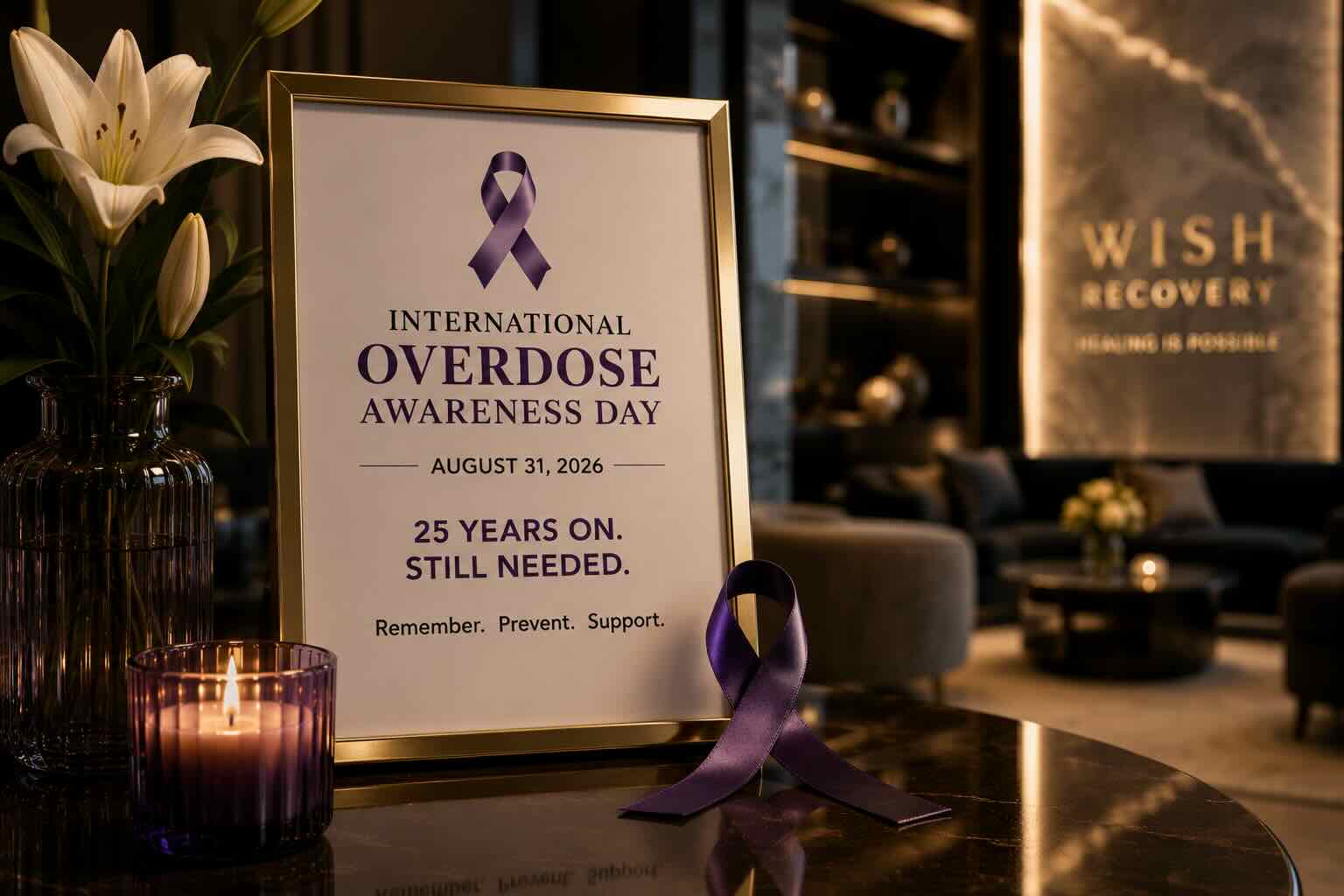
International Overdose Awareness Day 2026: What It Is and How to Help

Every August 31st, a purple ribbon reappears. Pinned to a jacket, taped inside a car visor, printed on a porch flag. Most years you barely notice it.

This year, on the 25th International Overdose Awareness Day, often shortened to IOAD, it's worth a longer look. Twenty-five years is a long time to keep saying the same thing: overdose is preventable, and it's still happening in your neighborhood, your family, maybe your own house. This day exists to raise awareness and support overdose prevention, but it only works if the ribbon leads somewhere.

Key takeaways

  • International Overdose Awareness Day 2026 falls on August 31 and marks 25 years under the theme "25 Years On. Still Needed."
  • Recognizing an opioid overdose is a learnable skill, not an instinct, and most bystanders never get the chance to practice it.
  • Naloxone can reverse an opioid overdose in minutes, but it always pairs with calling 911, never replaces it.
  • California's Good Samaritan law protects people who call 911 in good faith during an overdose, even though many still fear arrest.


You don't need to wait for a crisis to learn what comes next. Start my conversation with Wish Recovery today, no pressure attached.


How Long Does Adderall Stay in Your System?

Your body can feel completely back to normal, and a drug test can still come back positive. Knowing how long Adderall stays in your system gives you real answers, not guesswork.

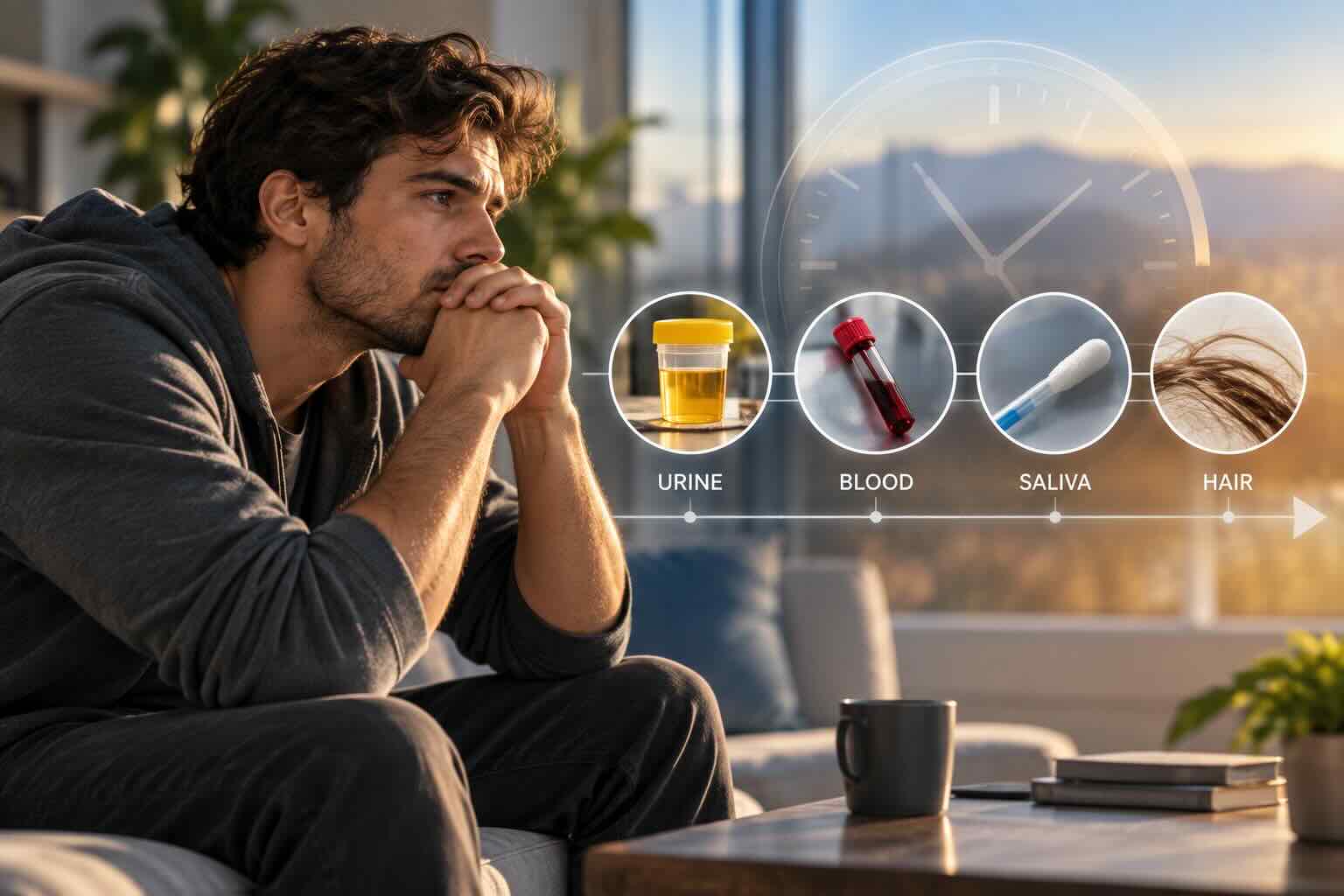
How long does Adderall stay in your system? The answer depends on which test is used, which formulation you took, and how your body processes Adderall. Detection windows vary widely across urine, blood, saliva, and hair. This article walks through each one clearly, covers the length of time Adderall stays in your system and the factors behind it, and addresses what happens when a prescription meets a drug screening.

Key takeaways

  • Urine tests can detect Adderall for 2 to 4 days after the last dose.
  • Blood levels drop within 24 to 46 hours, but Adderall can be detected in hair follicle tests up to 90 days later.
  • Extended-release (XR) formulations clear more slowly than immediate-release (IR) versions, one of the biggest factors that affect how long Adderall stays detectable.
  • Subjective effects fade around 8 hours, well before the drug has fully left the body.


If you have questions about Adderall use, prescription concerns, or what to expect from stopping, our team is here to talk. One conversation does not commit you to anything.


Opioid Withdrawal Symptoms & Timeline: What to Expect When You Stop Using

Your body isn't betraying you. It's adjusting to something it adapted to over time, and that adjustment has a name, a timeline, and a path through it. Opioid withdrawal symptoms are real, measurable, and for most people, time-limited.

Knowing what's coming—and when—changes how you move through it. This article walks you through what to expect. You'll learn when symptoms start, how long they last, why starting medication can sometimes feel worse before it gets better, and what actually makes the process safer.


Key takeaways

  • Opioid withdrawal symptoms can begin within 4–6 hours of the last dose for short-acting opioids, or 24–36 hours for long-acting opioids like methadone.
  • The acute phase of withdrawal typically resolves within about a week for most people.
  • Sleep trouble, low mood, and cravings can linger for several weeks after the acute phase ends—this is normal and has a name.
  • Clinicians use a validated 11-item tool called the COWS (Clinical Opiate Withdrawal Scale) to measure how severe withdrawal is in real time.


If you're not sure where to start, Wish Recovery's team is available to answer your questions without pressure. Reach out any time—one conversation doesn't commit you to anything.

Marijuana Withdrawal Symptoms & Timeline: What to Expect in 2026 When You Quit

You quit a few days ago and now you can't sleep. Your patience is gone. Food either sounds terrible or like the only thing that matters. And somewhere under all of it sits a quiet, nagging question: is this real, or are you making it worse than it actually is?

It's real. Marijuana withdrawal symptoms show up on a predictable timeline, they're driven by biology, and they ease. This guide walks through what's happening, how long it tends to last, and where the line sits between hard-but-normal and time-to-talk-to-someone.


Key takeaways

  • Withdrawal symptoms usually start one to three days after your last use and peak between days two and six.
  • Most symptoms ease within one to two weeks, though sleep and mood can linger a little longer for some people.
  • These symptoms come from real, measurable shifts in brain chemistry, not weakness or imagination.
  • Severe withdrawal symptoms, deepening mood changes, or anything lasting past two weeks are worth a real conversation, not more searching.


If any of this sounds like more than you want to carry alone, we're here to talk it through, no pressure, no commitment. Reach out to our team whenever you're ready.


How Long Do Opioids Stay in Your System? A Guide by Drug and Test Type

The question feels urgent when you're the one asking it. You want a number, something solid to hold onto, as you try to learn how long opioids stay in your system, and the honest answer is that it depends on which opioid, which test, and which body. That uncertainty is real, and it's worth understanding. Physical withdrawal symptoms complicate things further, and if that's part of what you're dealing with right now, we've mapped out what to expect during opioid withdrawal too.

Key takeaways

  • Heroin and other short-acting opioids usually clear a urine test in one to four days. Hair holds a longer record, roughly 90 days back.
  • Fentanyl slips past a lot of standard panels. Unless the lab runs a fentanyl-specific test, it can go undetected entirely.
  • Dose, how often you use, your own body chemistry, and how well your liver and kidneys are functioning all shift the numbers.
  • A single test result rarely tells the whole story. Context from someone who understands these limits matters.


If you're trying to understand what a result means for you or someone you care about, you don't have to sort through this alone. Reach out to Wish Recovery's team for a confidential conversation with no pressure and no obligation.


How Long Do Benzos Stay in Your System?

You took the last dose days ago, and you're still not sure if it's gone. Maybe a drug test is coming. Maybe you're wondering if enough time has passed to stop on your own.

Maybe you're watching someone you care about and trying to understand what their body is still holding onto. The answer depends on the type of benzodiazepine you took, how long you've been taking it, and how your body processes it. These four drugs clear at very different speeds, and the timeline alone won't tell you what you actually need to know about stopping safely.

Key takeaways

  • Short-acting benzos like Xanax (alprazolam) leave the body faster than long-acting benzodiazepines like Valium (diazepam).
  • Valium's active metabolite, desmethyldiazepam, extends its detection window far beyond what most people expect.
  • Body fat, liver function, kidney function, and how long you've been using all affect how long benzos stay in your system.
  • Knowing when a benzo clears your body is not the same as knowing whether it's safe to stop taking it.


If you have questions about what comes next, our team at Wish Recovery is here. Reach out today and one conversation won't commit you to anything.


How Long Does Cocaine Stay in Your System? What Urine, Blood, Saliva, and Hair Tests Really Show

The high was gone hours ago. The worry hasn't left at all.

If you're wondering how long cocaine stays in your system, most standard urine tests look for a cocaine metabolite. A urine drug test can usually detect it for about one to four days after occasional use, and longer with heavy use. The detection time shifts with the amount of cocaine used, how often you use cocaine, and the type of test a lab runs. The number on a test and how you're actually doing are two separate questions, and this article answers both. Whether you're the one waiting on a result or the parent or partner beside them, you're welcome here.

Key takeaways

  • Most drug tests look for benzoylecgonine, a cocaine metabolite that stays in the body much longer than the high.
  • Cocaine is typically detectable in urine for one to four days after occasional use, and up to a week or more with heavy, frequent use.
  • Hair tests can show a pattern of use for about three months, but may miss a single use.
  • Mixing cocaine with alcohol creates cocaethylene, which is harder on the heart and liver.
  • Detectable and impaired are different things, and so are a clean test and feeling okay.


If you'd rather talk this through with a person, you can reach out to our team in confidence. Asking a question doesn't commit you to anything.


How Long Does Weed Stay in Your System? Detection Explained

You've got a drug test tomorrow—maybe for a job you need, maybe because your probation officer requires it, maybe because your custody agreement says so—and you're Googling at 11 PM wondering how long does weed stay in your system. The internet's full of conflicting timelines about how long marijuana stays in your system, detox teas promising miracles, and panic. Here's what determines how long marijuana stays in your system, what different drug tests measure, and when the math works in your favor—or doesn't.

Clinical Review


The article emphasizes that while understanding how long THC stays in your system is important for drug testing, the more significant issue is your overall relationship with cannabis. Passing a drug test may address an immediate concern, but if quitting feels difficult or marijuana use is negatively affecting your health, relationships, work, or responsibilities, it's important to address the underlying pattern of use rather than focusing solely on the test.

Understanding the potential impacts of cannabis use—including its effects on your physical and mental health, daily functioning, and personal or professional life—can help you make informed decisions. Recognizing these risks and seeking support when cannabis use becomes difficult to control can lead to healthier, more sustainable outcomes than relying on short-term solutions.

ROZ RAZZAGHMANESH
Clinical Director, LMFT 102602
WISH RECOVERY